Introduction
With the intensification of global warming, the El Nino phenomenon poses increasingly severe challenges to photovoltaic power stations. Many extreme climates that have never occurred before are now influencing our current industry design standards.
Contents
Chapter One: Disaster Falls from the Sky
Chapter Two: Downstrike Burst
Chapter Three: Sudden Increase in Wind Speed
Chapter Four: Sudden Change in Wind Direction
Chapter Five: Industry Awakening
Chapter One: Disaster Falls from the Sky
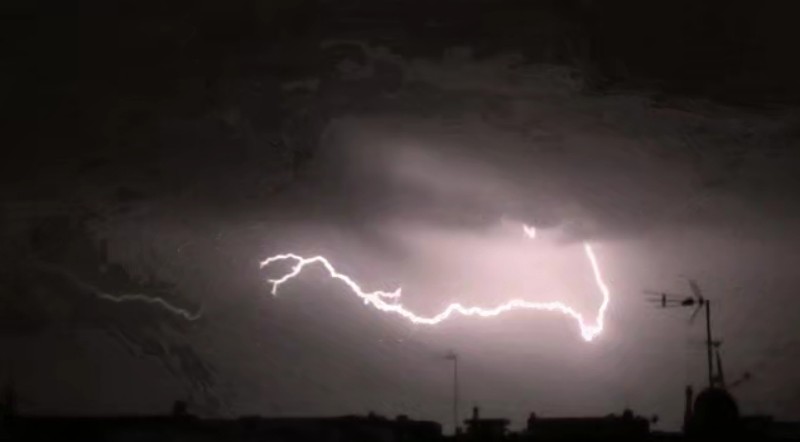
March 17, 2025, 4 a.m., Texas, USA. The rain outside the window had been drizzling all night. Suddenly, a dazzling thunderclap, like a sharp sword, split the pitch-black sky. Immediately after, the fierce wind, like a wild beast that had broken free from its invisible shackles, roared wildly and rampaged across the ground. The strange crackling sounds that followed gradually broke the tranquility of the small town.
“I was sound asleep when I was suddenly awakened by a loud noise, as if someone was throwing stones at my house. When interviewed, housewife Luna was still shaken. "But the stones came from all directions without any pattern. I was terrified. The horses in the stable were neighing non-stop. That sound was so nerving."

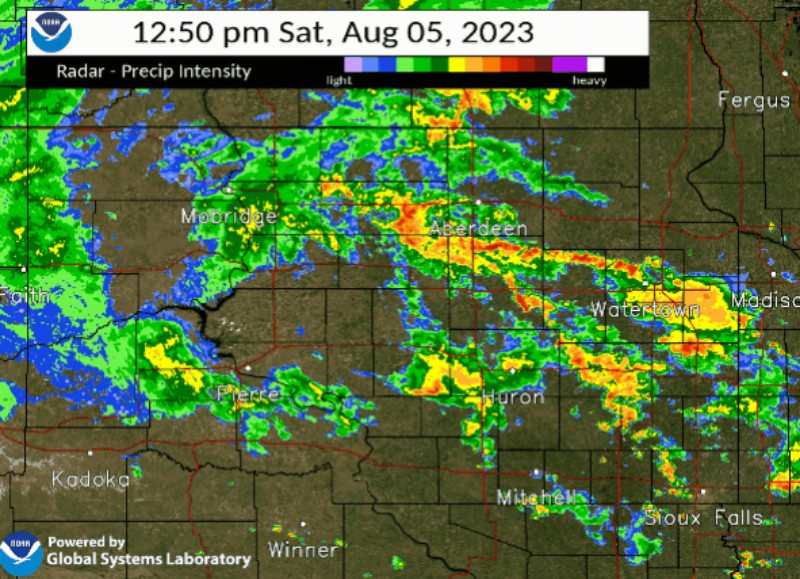
▽ Thunderstorm weather
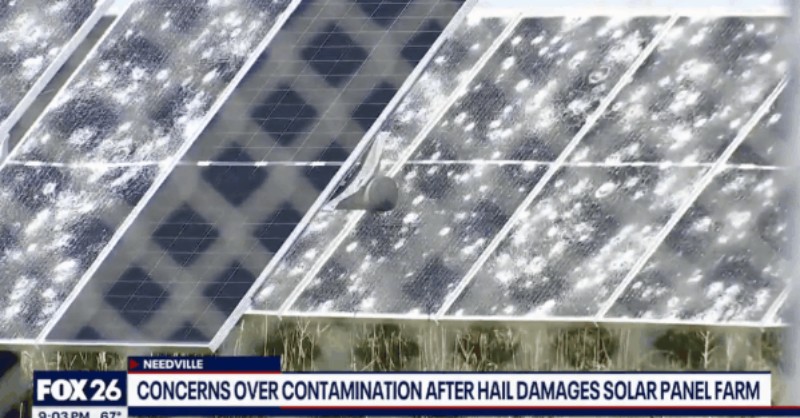
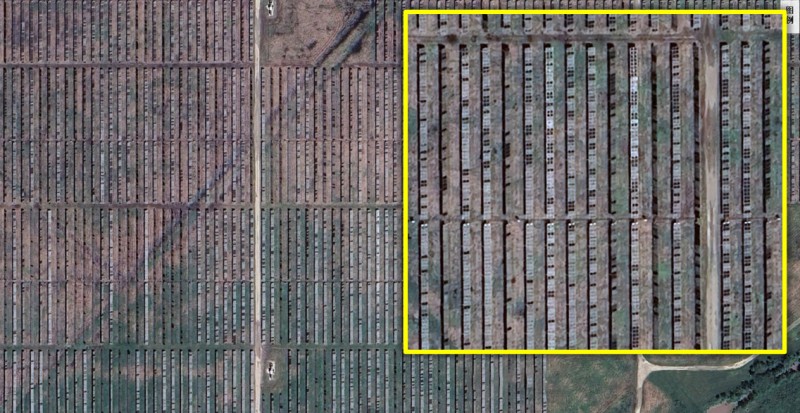
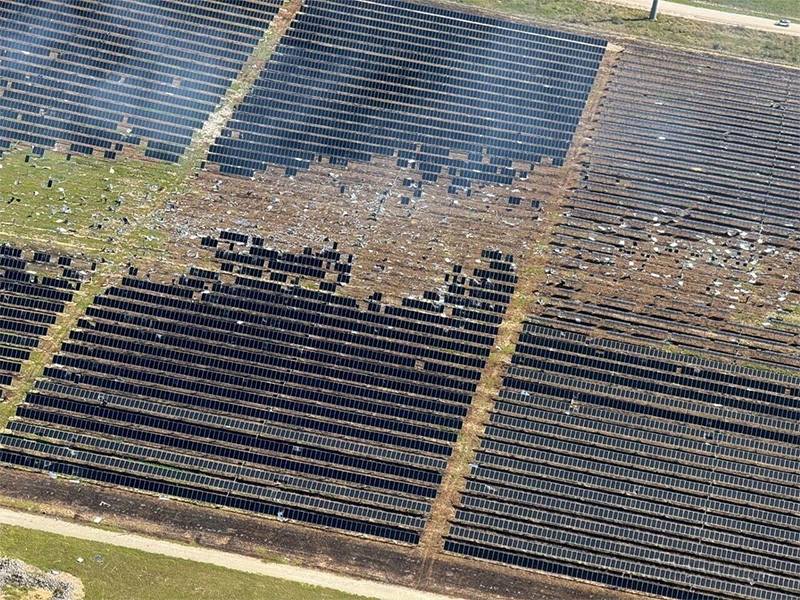
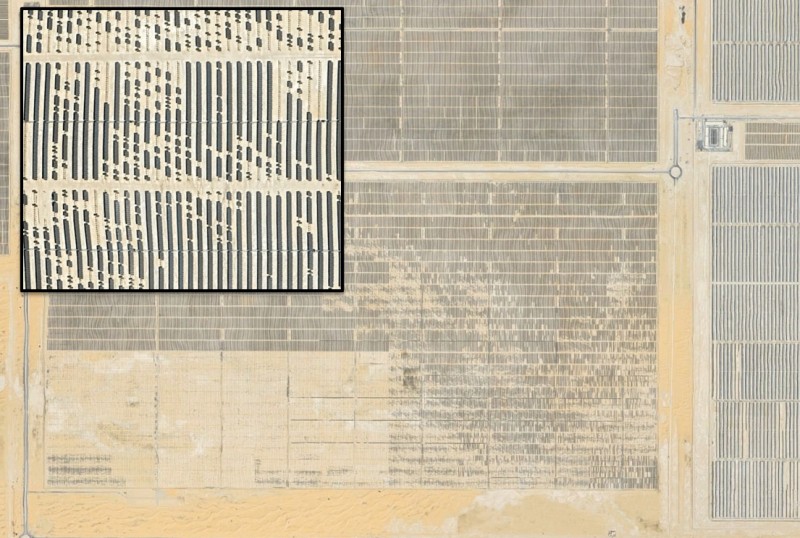
It wasn't long before dawn broke and the rain stopped. Early in the morning, veteran police officer Frank was driving on Highway 36. In the past, if you turned right at the intersection ahead, you could pass a photovoltaic power station. However, today, the scene before his eyes was chilling. It was a sprawling tracking system. On the originally black-toned components, various holes of different sizes appeared, covering the components like snowflakes.

▽ component was smashed by hail

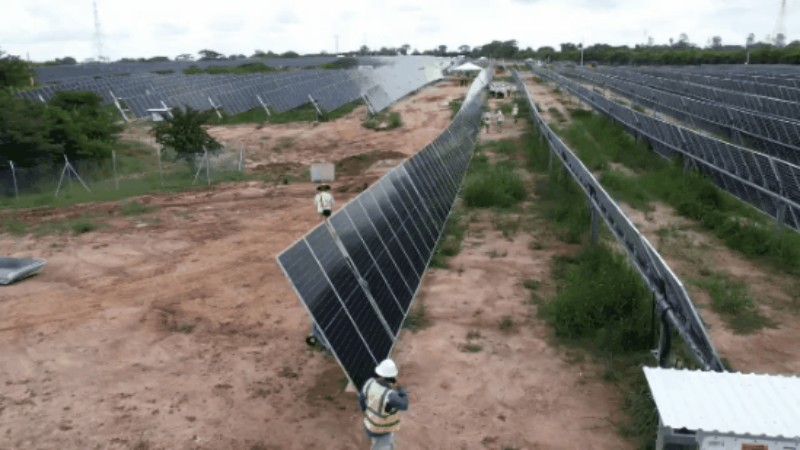
▽ The tracker was damaged by hail
In recent years, under the profound influence of the backdrop of global warming, the El Nino phenomenon has become increasingly prominent. Extreme climate events that were once regarded as extremely rare, occurring once in a hundred years or even once in a thousand years, are now frequently making appearances. Traditional design methods often plan ahead to ensure everything is foolproof. However, the occurrence of extreme weather is becoming increasingly irregular and unpredictable.

▽ The tracker was damaged by a tornado

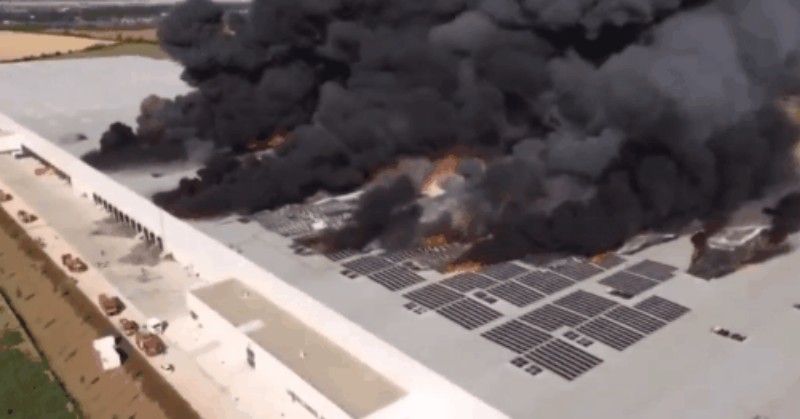
▽ Fires at photovoltaic power stations occur frequently
Among the numerous extreme weather conditions, there is one that is particularly headache-inducing. Its occurrence is not restricted by time or geography. Like an invisible ghost, it quietly shrouds the area where a crisis may occur, posing a huge threat to photovoltaic power stations.
Chapter Two: Downstrike Burst
Thunderstorms are a common meteorological condition, and their occurrence time is usually concentrated in the dusk or at night. During the occurrence of thunderstorms, a large amount of water vapor often accumulates, thus forming a series of "mobile fortresses" with dynamic characteristics that move rapidly on the ground.

▽ Cloud image of thunderstorm weather
These mobile fortresses usually carry many powerful weapons. Once the conditions are right, the fortresses will launch attacks on the ground, causing severe weather phenomena such as heavy rain, hail and strong winds. The most significant impact on photovoltaic trackers is a local climate caused by thunderstorms: downburst.

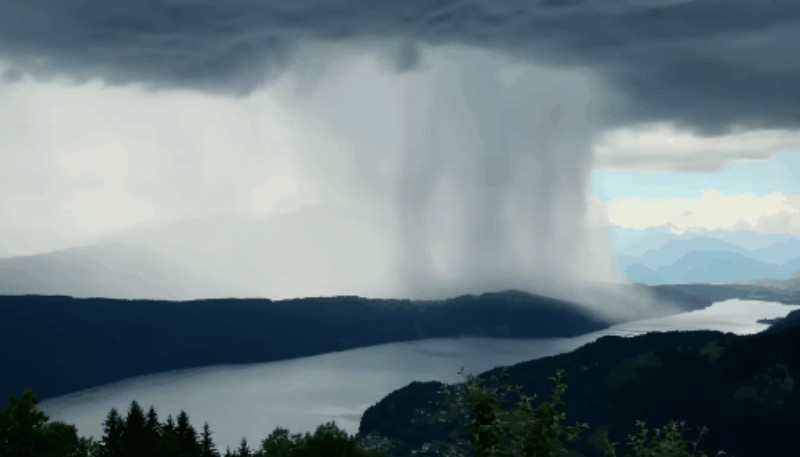
▽ Downstrike burst
A Downburst, also known as a downburst in English, is a local and small-scale strong downward air current. When this strong air current hits the ground, it will generate destructive linear strong winds. It's like an "air bomb".
The threat of this "air bomb" to photovoltaic trackers mainly comes from two aspects:
• a sudden increase in wind speed, with the wind speed rising rapidly within a short period of time;
• The wind direction changes suddenly, rapidly within a short period of time.
Chapter Three: Sudden Increase in Wind Speed
Friends familiar with photovoltaic trackers should know that when the wind speed exceeds a certain threshold, the tracker will enter the strong wind protection mode. This mode requires the tracker to rotate to the most favorable Angle for itself and stop at this Angle to resist extreme wind speeds.
From here we can find that for the tracker, there are two key wind speed parameters:
• Operating wind speed: The minimum wind that triggers the strong wind mode
• Extreme wind speed: The maximum wind speed that can be endured at the docking Angle
We can't help but wonder: If the tracker triggers the strong wind mode and the wind speed keeps rising during its rotation, what kind of impact will this have on the structure of the tracker? To discuss this issue, we need to introduce a meteorological term: "sudden increase in wind speed".

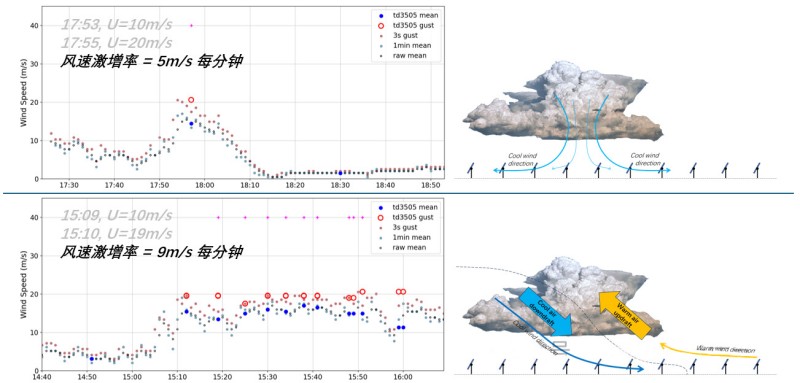
▽ Two types of downburst currents cause a sharp increase in wind speed
Microburst (Part 1)
Derecho (Part 2)
A sudden increase in wind speed, that is, a sudden rise in wind speed within a short period of time, can cause the tracker to be unable to adjust to the Angle of the strong wind in time and may be destroyed by it. This phenomenon is particularly dangerous for single-point drive trackers that adopt the windward docking mode.

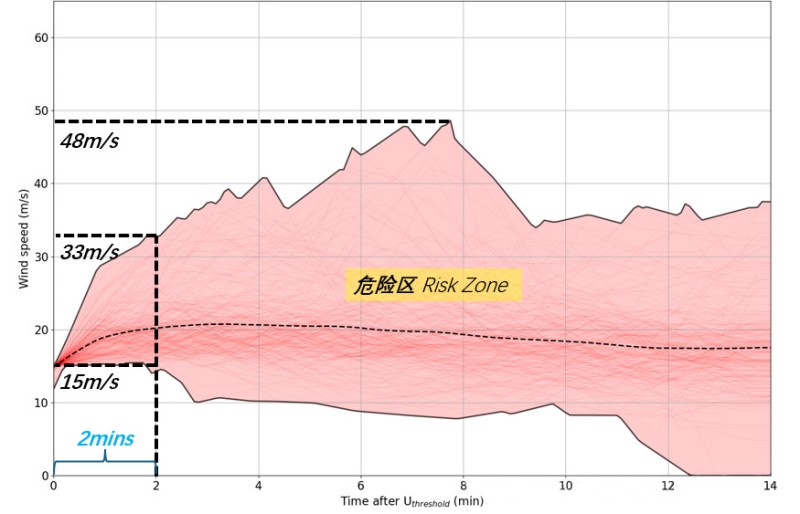
▽ A chart of the sharp increase in wind speed in a certain region of the Middle East over the years
(15m/s reference, 3s@10m)
The wind speed can rise from 15m/s to 33m/s at the fastest within 2 minutes
The wind speed soared to 9 meters per second per minute
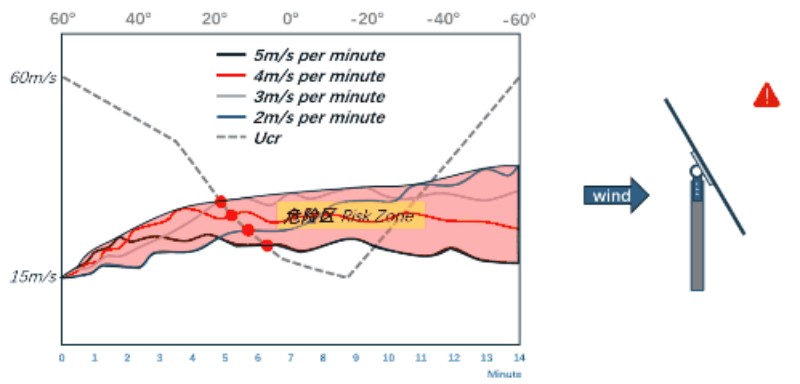
For single-point drive trackers, 0° is the most unfavorable Angle. The closer to 0°, the worse the stability of the tracker. If the tracker is parked facing the wind but is in the leeward state at this time, after entering the wind protection mode, the tracker needs to rotate in the opposite direction, commonly known as "turning around".
This kind of U-turn tracking will inevitably cause the system to "pass" by 0°. As a result, the tracker will become increasingly unstable as it rotates, and the critical wind speed Ucr will drop further and further. The tracker will gradually enter the "danger zone". If the wind speed rises rapidly at this time, the so-called strong wind protection mode may turn into a "strong wind suicide mode", and the "U-turn" tracking would really mean making a U-turn.

▽ Single-point drive "dock against the wind"
It is impossible to avoid the risks brought by the sudden increase in wind speed
The problem of sudden increase in wind speed is becoming increasingly serious, especially in the Gobi Desert areas. Due to the large temperature difference between day and night, many trackers have suffered varying degrees of damage, mostly related to the sudden increase in wind speed. However, apart from the sudden increase in wind speed, a sudden change in wind direction is another potential threat.

▽ A sudden increase in wind speed caused damage to trackers in a certain area of the Middle East
Chapter Four: Sudden Change in Wind Direction
In order to reduce the wind pressure on the modules and enhance their structural stability, traditional photovoltaic tracking systems usually adopt the protection strategy of "docking against the wind", that is, making the modules face the direction of the wind. However, the direction of the wind is not fixed. Under certain extreme weather conditions, such as when a downburst occurs, the wind direction can suddenly change. At this point, the tracker needs to adjust its Angle immediately to prevent damage caused by wind blowing from the back of the component.

▽ A fast motor is adopted to reduce the rotation time of the tracker
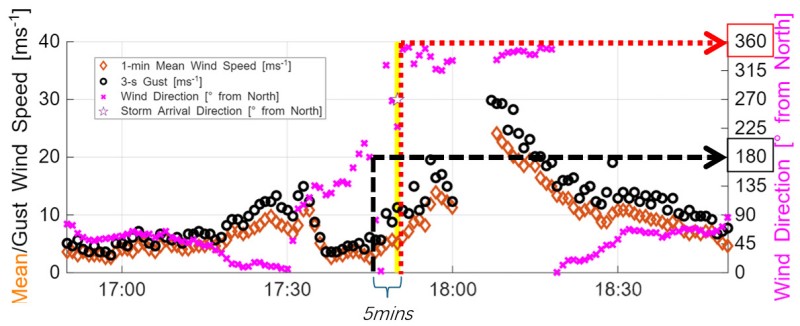
The sudden change in wind direction caused by a downburst is characterized by its short duration and high speed, and can even achieve a 180-degree turn within five minutes. This means that the tracker has only five minutes to complete the Angle adjustment. Many tracker manufacturers have recognized this issue and adopted fast motors to increase the rotational speed of the trackers.

▽ The wind direction changed by 180 degrees within five minutes
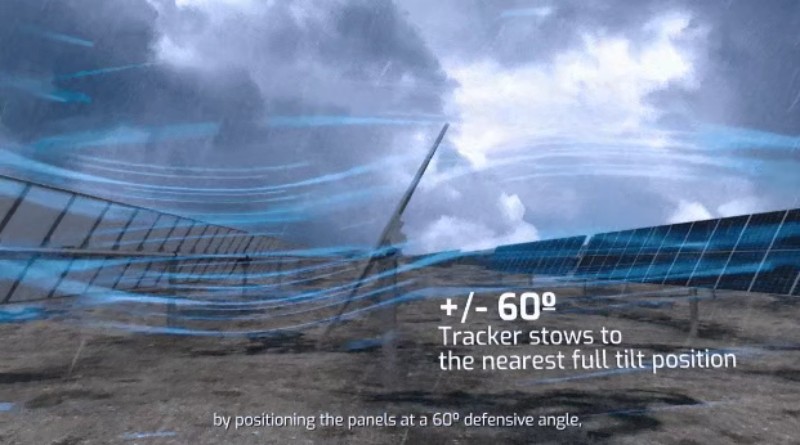
Unfortunately, most tracker manufacturers adopt a large-angle 60° windward parking strategy. In the worst-case scenario, to turn from 60° east to 60° west, the tracker needs to rotate by a range of 120°. Due to the rapid change in wind direction, even with the use of a fast motor, the time left for the tracker is only five minutes, making it difficult to reach the designated position in time before the wind direction changes.
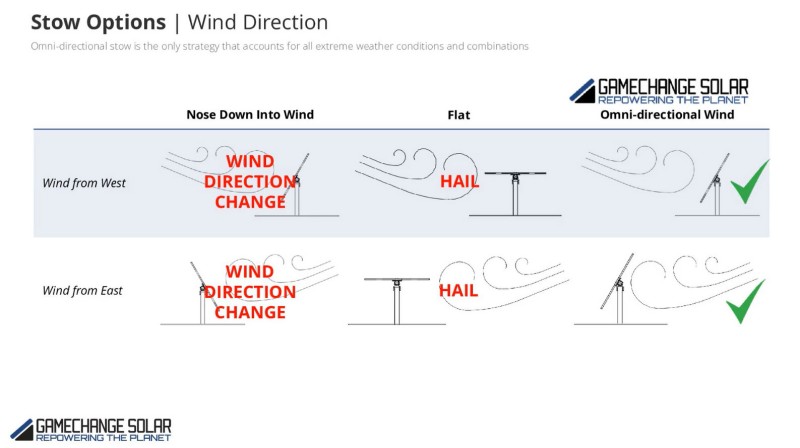
For this reason, tracker manufacturers have proposed a "full-angle" wind stopover strategy, which means that regardless of how the wind direction changes, the tracker will stop at the maximum Angle position closest to the current tracking Angle.


▽ Many tracking manufacturers had to give up docking against the wind
Change to a "large Angle without wind direction" parking strategy
The picture above: PVH
The following picture: GameChange
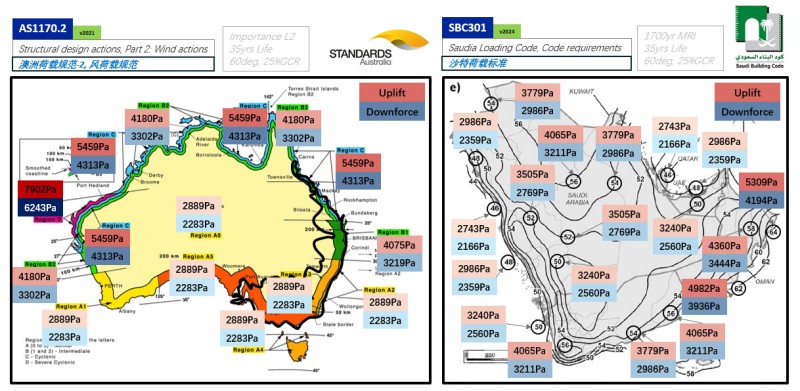
This design breaks the traditional "windward docking" mode, as in this case, the tracker needs to withstand the maximum wind speed at the maximum Angle position on the leeward side. This places extremely high demands on the structural reliability of the entire tracker and also poses a severe challenge to the pressure-bearing capacity of the components.

▽ The Uplift pressure of components is generally too high when it is sheltered from the wind
Chapter Five: Industry Awakening
After the Jordan typhoon disaster in 2018, the first industry awakening of trackers was triggered. A large amount of financial and human resources were invested in the field of wind engineering. The importance of wind engineering has been deeply rooted in people's hearts. Many outstanding engineers have mastered certain knowledge of wind engineering and can even rival senior wind engineering scholars.
Nowadays, the damage caused by extreme weather to photovoltaic power stations has once again sounded the alarm for the tracker industry. A large number of projects are facing situations that have never occurred before. Most extreme weather conditions have not been verified and analyzed in the early stage of design.
Therefore, we can predict that in the future, "atmospheric science" will become an important consideration in tracker design and is bound to drive the second awakening of the tracker industry.

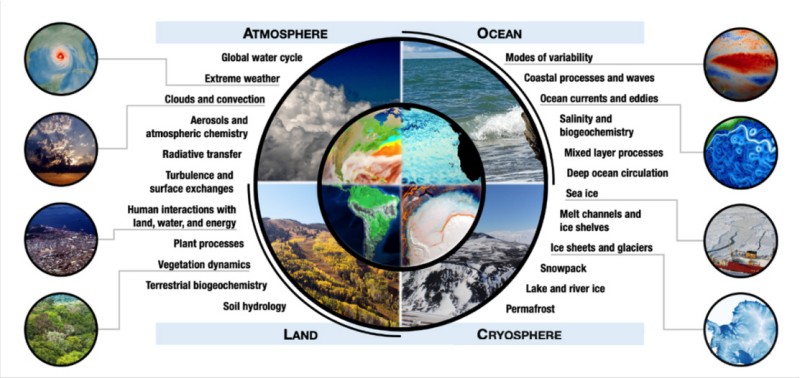
▽ Atmospheric science is a branch of Earth science
Meanwhile, many third parties have also noticed the severe challenges that extreme weather poses to photovoltaic brackets. For instance, institutions such as VDE and RETC that have performed outstandingly in the field of hail resistance research.
Take the independent non-profit organization RMI in the United States as an example. The organization has published and released three analysis reports on the impact of extreme weather on photovoltaic brackets. The reports are detailed and highly professional, providing important references for the industry.
In addition to the assistance from third-party institutions, tracker manufacturers themselves are also actively exploring methods to obtain real meteorological data. By comparing and analyzing the results with wind tunnel tests, they aim to optimize the design of trackers and enhance their ability to cope with extreme weather.

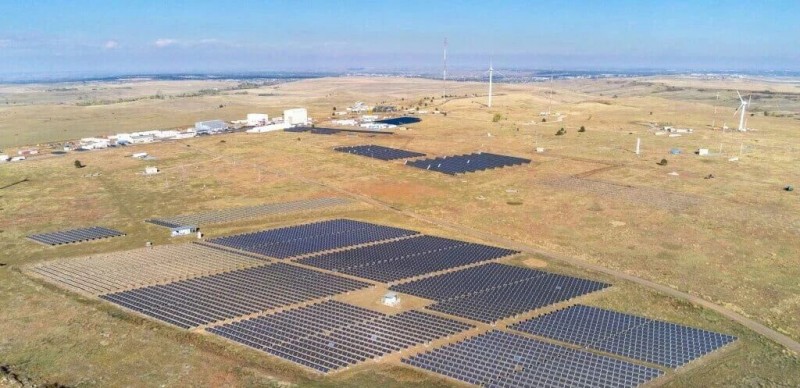
▽ NREL Flatirons Campus
The outdoor wind farm test base of NX and ATI

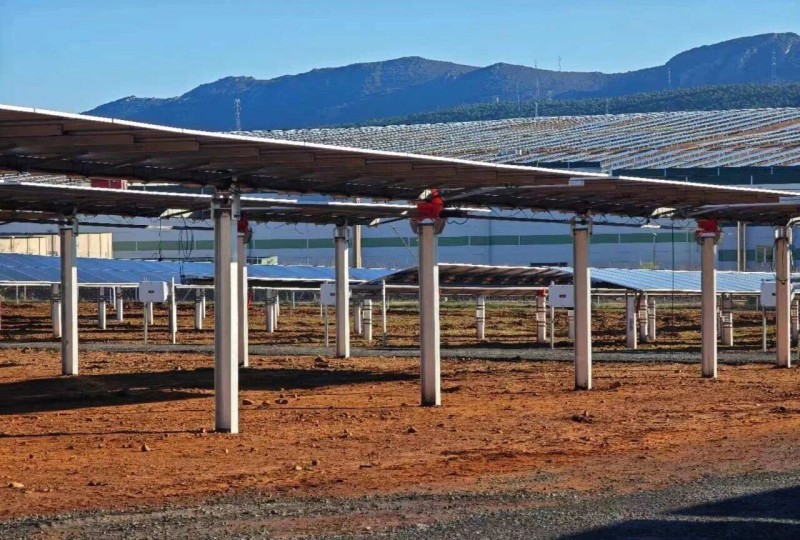
▽ The Puertollano Integrated Microgrid Project in Spain
Arctech Outdoor Wind Farm Test Base
The photovoltaic tracker industry has stumbled along the way, encountering numerous difficulties and challenges. Extreme weather phenomena are indeed terrifying, but they are not insurmountable. However, when we stand at the crossroads of industry transformation, a greater crisis quietly emerges.
➡️We look forward to your visit to our website and discussing more technical knowledge about solar energy with you: https://www.esolarfirst.com
메시지를 남겨주세요
Wechat으로 스캔 :