

정밀 디스플레이, 한계를 넘어
I. Project Overview
Project Background
As the worldwide energy mix moves faster toward green and low-carbon development, Malaysia keeps advancing renewable energy deployment and broadening solar power use. Ground-mounted PV projects, a key element of clean energy build-out, are increasingly moving into challenging terrain, which raises the bar for terrain adaptability, foundation construction efficiency and environmental performance of solar module mounting systems.
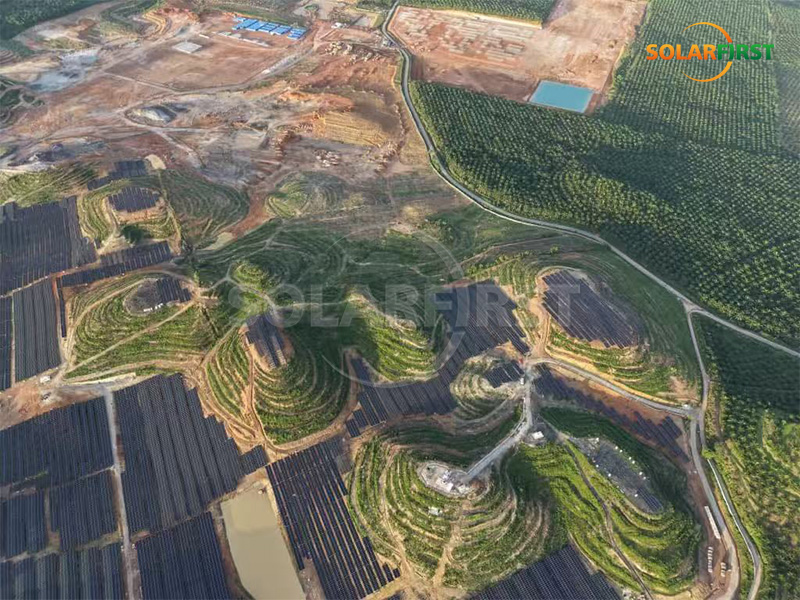
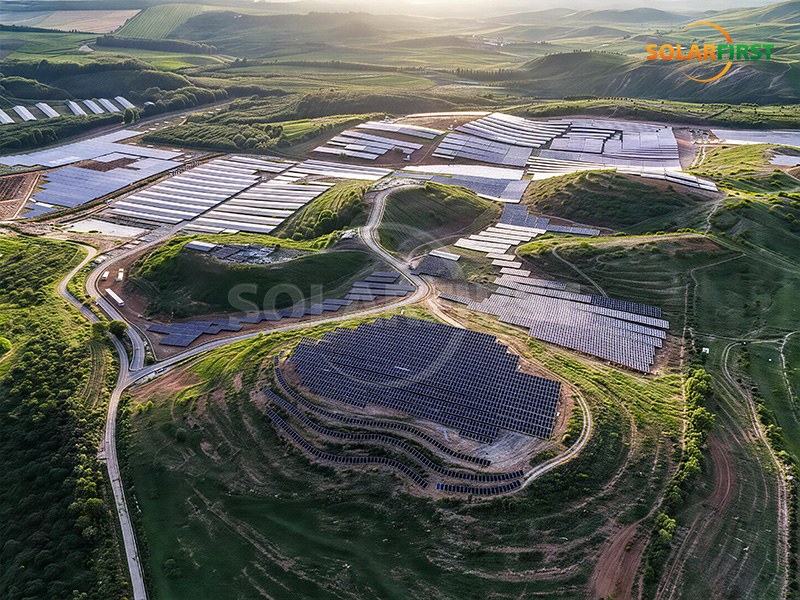
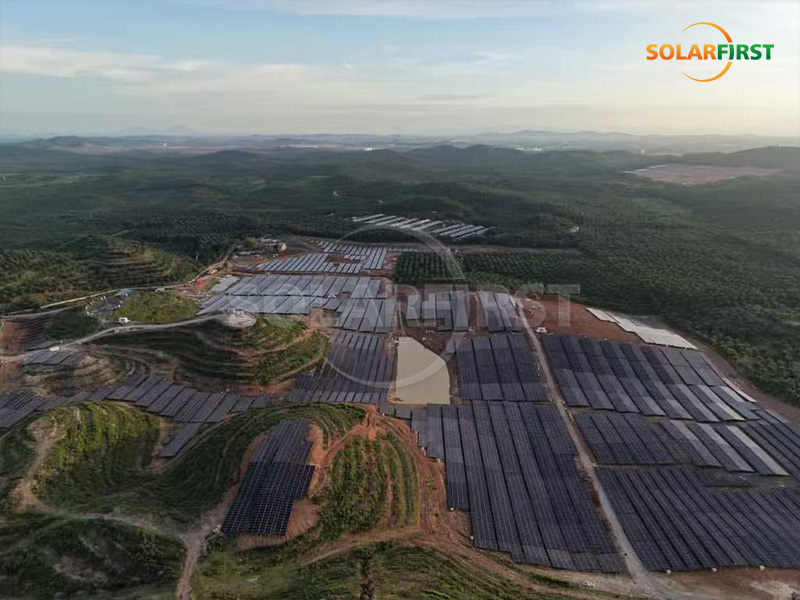
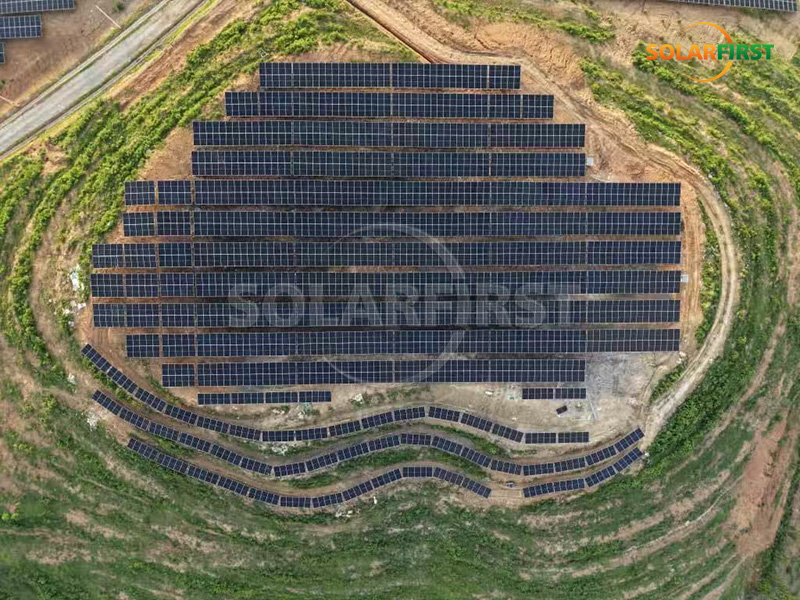
Solar First Group took part in the construction of the 21.47 MWp ground-mounted solar module mounting system project in Malaysia. The project applies a carbon steel ground-mounted solar module mounting system together with helical pile foundations. Given difficult construction conditions—mountainous terrain with marked elevation changes, hard soil and subsurface gravel—the project uses a tailored design of the solar module mounting system and a differentiated array arrangement to cope with varying slopes and terrain. This ensures installation adaptability of the solar module mounting system while substantially cutting on-site earthwork, offering an efficient and flexible approach for PV construction in complex mountainous settings.
Project Requirements
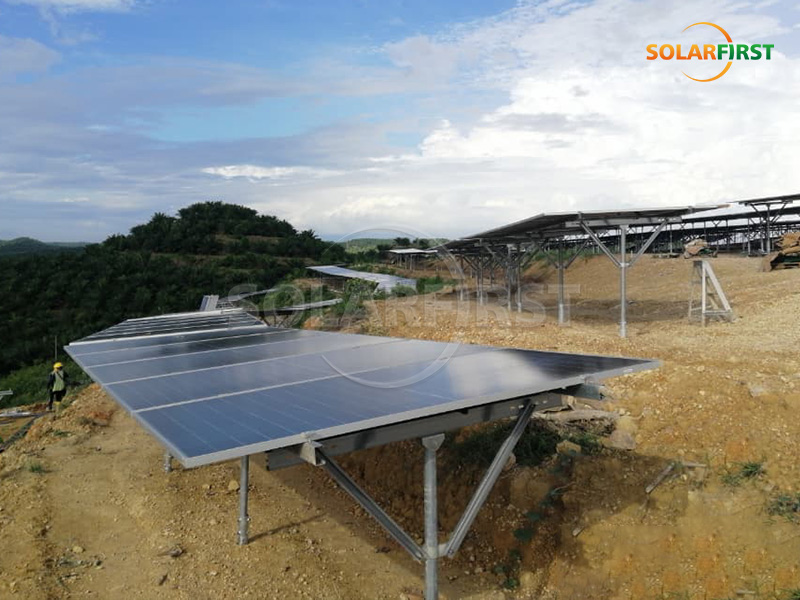
The site is topographically complex, with a maximum slope of 20°, and certain sections appear in stepped forms. The soil is relatively hard and includes subsurface gravel. Conventional site leveling and foundation construction methods tend to raise earthwork volume and construction difficulty.
The project’s central requirement is to configure the solar module mounting system and foundation system properly under complex mountainous terrain, reduce large-scale site leveling and earthwork excavation, limit disturbance to the original terrain and natural environment, and balance installation flexibility of the mounting system with on-site construction feasibility.
II. Project Challenges
1. Marked slope variations make uniform layout difficult
The site reaches a maximum slope of 20°, and gentle slopes, steep slopes and stepped slopes are intermingled. Installation elevations and array layout conditions vary considerably by zone. A uniform elevation and standardized array would offer insufficient on-site adaptability, adding local adjustment and site treatment work.
2. Hard soil and subsurface gravel complicate foundation construction
The soil is relatively hard and contains subsurface gravel. Conventional foundation types face constraints in drilling, excavation and construction efficiency. The foundation solution must suit site geological conditions and lessen dependence on extensive excavation and concrete works.
3. Earthwork control and ecological disturbance mitigation are demanding
The mountainous terrain is uneven. Large-scale slope cutting, filling and site leveling would involve substantial earthwork and disturb the original landform and natural environment considerably. The project therefore sets strict limits on reducing earthwork and protecting the original ecological environment.
III. Solutions
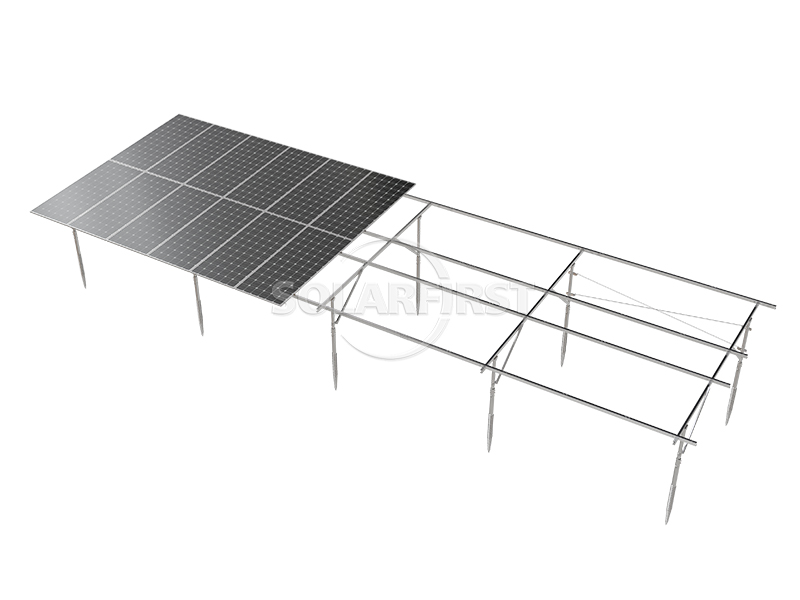
To address site terrain and geological conditions, Solar First Group applies a combined solution: an adjustable ground-mounted solar module mounting system, helical pile foundations and a sectional array layout. This replaces large-scale site leveling with slope-following layout and local adjustments.
1. Adjustable solar module mounting system and 2P/1P sectional layout
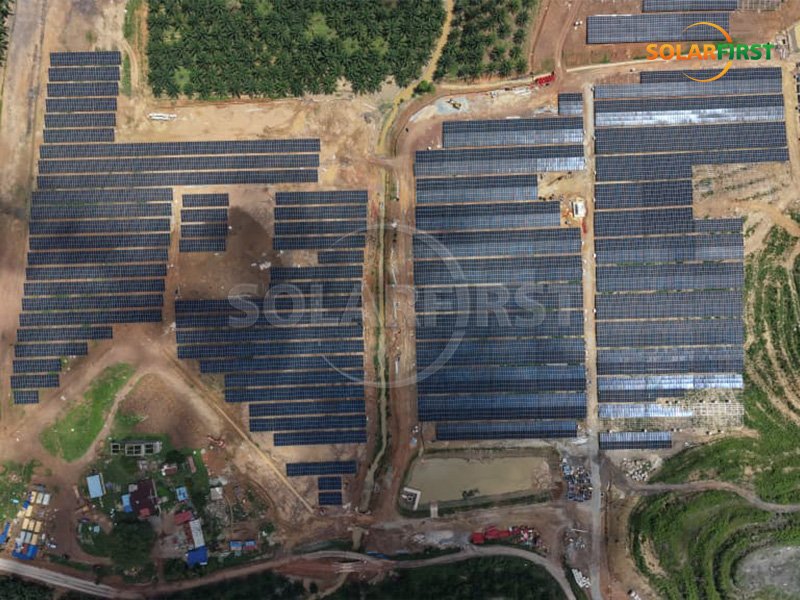
Column height and mounting tilt of the solar module mounting system are adjusted by slope section so that the array follows the terrain. In gentle and steep slope areas, a vertical 2P configuration is used to improve slope utilization; on the step surfaces of stepped slopes, a 1P configuration is used to allow local avoidance and flexible arrangement. Combining 2P and 1P enables differentiated layout across terrain units.
2. Helical pile foundations and construction adaptation in hard soil and gravel sections
The ground-mounted solar module mounting system adopts helical pile point foundations, reducing extensive concrete foundation construction. Before construction, test piles and site geological conditions are used to determine the screw-in procedure. In hard soil and gravel areas, measures such as shifting pile locations to avoid obstacles, local pre-drilling or adjusting pile positions are taken to ensure foundation construction feasibility.
3. Slope-following layout and local adjustments to control earthwork
The slope-following layout of the solar module mounting system, sectional arrays and point foundations reduce overall slope cutting, filling and site leveling. Local adjustments are made only where installation conditions are insufficient, along with topsoil preservation and drainage planning, to reduce construction disturbance to the original landform and natural environment.
IV. Project Value
The 21.47 MWp ground-mounted solar module mounting system project for mountainous terrain in Malaysia fully reflects Solar First Group’s ability to deliver customized solar module mounting system solutions for complex terrain.
In the face of multiple challenges—slopes up to 20°, hard soil, subsurface gravel and stepped slope surfaces—the project combined helical pile foundations, adjustable solar module mounting system design and differentiated vertical 2P/1P layouts, effectively integrating the mounting system solution with on-site terrain conditions.
With core advantages of flexible adaptation to complex terrain, reduced earthwork and lower disturbance to the natural environment, the solution lessens reliance on large-scale site leveling and offers a more flexible construction approach for mountainous PV projects.
Solar First Group will continue to advance solar module mounting system technologies and system solutions. Guided by site-specific design and flexible product configurations, it will contribute to efficient construction of global PV projects and promote coordinated development of green energy and natural environmental protection.



메시지를 남겨주세요
Wechat으로 스캔 :

 한국어


 IPv6 네트워크 지원